
Greetings everyone. If you’re reading our newsletter, it’s likely that you’re already a supporter of Williams Wealth Management. So many of you express that as clients you are invested in us personally and you want us to succeed. We can’t help but to be humbled and appreciative. We want to live up to that.
In that spirit, I’d like to share some words about our business and the future as we see it.
We’re a team of 4 people. We have 3 advisors and one operations person. In a year or two maybe that will be 5 or 6 or 7. The main point of our business model is to allow our clients work with qualified people who are not too busy to pay attention to the important concerns of our clients. We need Advisors who are not seeing too many people each day. Not handing clients over to young people with no experience.
We have 3 advisors and one operations person.
Parts of our business needs to scale. Other parts should not. A great deal of the meaning of life is analogue.
We all interact with the scaled-up, digitized world: insurance, taxes, corporations, government. Sometimes it offers us convenience and efficiency. If I had to, I’d pay 5x what I pay for electricity, for my cell phone, for the internet. These technologies deliver tremendous value above what they cost because of scale. If I got transported back in time ala Connecticut Yankee in King Arthur’s court, I would not be able to invent the TV or the cell phone or any number of products that coalesce from a massive amount of human collaboration over long periods of time. We are the beneficiaries of that scale. Corporations are necessary for that, for more than one lifetime’s worth of progress, to organize a lot of collaborators. So are governments.
On the other hand, sometimes you call a number and push some buttons on your phone, beep, boop, beeeeeep, asterisk, pound, last 4 digits, what’s your blood type… and wait on hold and get transferred to Maylasia and you are literally screaming at a robot: Representative!! HUMAN! I need to talk to a human!
On the other hand, sometimes you call a number and push some buttons on your phone, beep, boop, beeeeeep, asterisk, pound, last 4 digits, what’s your blood type… and wait on hold and get transferred to Maylasia and you are literally screaming at a robot: Representative!!
I’m pretty sure the robots aren’t allowed to hang up when you go full Yosemite Sam on them. Probably they are recording me cussing out the robots. I hope so. I’m sure that will hurt my social credit score in 2045, and they will say he IS an old white man, and grade me on a curve.
Sometimes you spend $20,000 a year on health insurance and can’t get a doctor to listen. Sometimes in order to get into your credit card account, you have to change a password, and then you need to change a password in order to change the other password and you spend 2 hours doing something that should have taken 5 minutes. It makes you nuts. It can drain the joy from life and make you feel ineffective.
Some things are too important to be systematized. They require individual attention. I find myself wanting this from my doctors, and I’m about to pay for concierge medicine to ensure that. How does that work? A qualified person is kept on retainer so that they can interact with much fewer people and give each person more attention. That means each patient needs to be able to pay somewhat more.
Some things are too important to be systematized.
Is this elitism? Or is it literally why you went to work to earn the money? To insulate yourself and the people you love from *some of the problems of life.
Our business is our attempt to succeed in the scaled-up world, but mediated through human experiences. Hopefully you are calling us rather than shouting into the void when you are concerned about financial matters. Hopefully you think this is an ok place to talk about personal matters. I think it is. Money is interwoven into our relationships, motives, fears, psyche. It frames many of the facts of each person’s life.
You’ll note that many people like lawyers and financial advisors who deal with synthetic realities all the time are fairly unhealthy as a group. Alcoholism and depression and divorce are more common in these fields. I’m pretty sure that doesn’t come from talking to people but from interacting with value systems that are not human values and from staring at screens indoors instead of enjoying fresh air and sunlight. From working too much on the wrong things. The animal parts of us suffer.
You’ll note that many people like lawyers and financial advisors who deal with synthetic realities all the time are fairly unhealthy as a group.
Having observed this, we are finding ways to do it differently. Ideally, you should get advice from healthy, centered people.
And that’s why we run a “wealth management” business and we’re not bank brokers who are not allowed to say what they think, trying to manage 3,000 accounts. Nobody can maintain 1,000 active relationships. And it’s hard to be happy when your relationships are all seen through the lens of risk management, when people are treated as liabilities. This is nuts. These are not human values, they are the values of big money.
When we moved away from brokerage 2 ½ years ago, we had about $90 million under fee- based management. We’re now approaching $200 million under management, more than doubling that in 2 years without doubling the number of clients. We have about 130 families that we work for.
When we moved away from brokerage 2 ½ years ago, we had about $90 million under fee- based management.
I couldn’t be more happy with the decision to reorganize and start fresh on the Registered Investment Advisor side of the industry. We spend our time with clients. We can speak our perspective about markets. Addition by subtraction is a real thing.
Our plans for the future are grounded in our personal lives. How much money do we need to make to take care of our kids, fund college, fund retirement savings, take care of ourselves personally and travel a bit? I don’t have aspirations to have a BIG business. We’re looking for the right tradeoffs of effort, stress, time etc.
We all know the power of money to meet human needs and paradoxically, the diminishing spiritual returns of chasing it. Be careful what price you pay.
We all know the power of money to meet human needs and paradoxically, the diminishing spiritual returns of chasing it.
But there are many parts of life where we need to learn not to count the cost. To be all in.
“No man, having set his hand to the plow and looking back is fit for the kingdom of heaven.”
Do you think this is merely a religious concept about the afterlife? No, it’s about life. The rules of money tell you not to take responsibility, to diversify, to compartmentalize your relationships, not to go all in.
Do you think this is merely a religious concept about the afterlife?
But the rules of Spirit require everything you have. It’s also an image about looking to the future. You can’t be properly oriented towards life, looking backwards. You can’t plow straight furrows looking backwards. At what you could have done. Or what others have done to you.
Life must not be measured out in coffee spoons but in great heaps of presence and shared experience. Otherwise life passes and you don’t even know what you did with it. Money is measured by money. Life is measured in relationships.
Our value proposition is to form real relationships with our clients and to pay attention to them so that our advice is given in context. We measure some of that effect via investment returns compared to this or that index.
Our value proposition is to form real relationships with our clients and to pay attention to them so that our advice is given in context.
But I have thought for a long time that the most significant impact we have is through conversation: Yeah, maybe don’t make that investment. Maybe do give that money to your kid. Maybe think a little further ahead. Maybe don’t get caught in the story today. It’s just a story.
We can’t hear or accept any of that advice without believing someone has skill and that they care about me personally.
I can assure you that showing disregard to our clients is very painful to all of us, accidental or otherwise. If we miss a phone call or an email, it’s a failure of our systems, not our purpose. And our purpose drives us to build better systems to show care and attention.
I can assure you that showing disregard to our clients is very painful to all of us, accidental or otherwise.
This year, we are going to try to bring in about $45 million from fewer than 25 new clients. We are improving the flow of information within our system. We are investing in cyber security. We are developing our skills personally. And I feel that every person in our organization is growing personally and getting better at their own lives. Everyone here has moral courage. That’s a job requirement.
Hopefully you will feel that tangibly as we drive good communication and good investment decisions.
Our goals imply that our target client has more than $1 million. Indeed, this is who we like to win over, from a business model perspective. But please hear me, none of us grew up wealthy. We will talk to literally anybody you ask us to help. We have a business model for making money: we manage money for people who have it or are building it quickly. But if you call us up and say: please talk to my nephew, please talk to my neighbor, please talk to my daughter, please talk to my rotary, my garden club, this high school, my men’s group, my church, my university, this non-profit –we are going to do that.
Our goals imply that our target client has more than $1 million.
Finding your collaborators is the most important thing in life. The money will work out. We all need to operate less like scared little mouses who are worried about finding lunch. Resource scarcity is not the American problem, although it still is for some people. A lack of relatedness is the bigger problem.
Life is a long game that surely speeds up at the end. We are deeply optimistic that the problems of life can be addressed and some of them solved. If you’re working on important things with someone great, you’re already succeeding: You’ve taken up the business of life rather than avoiding it, and you’re going to make some friends in that effort. Friends are the reward for having courage and showing care.
Investing is also profoundly optimistic: we are trying to make a better future with more opportunities. We are trying to spend time with our kids in a nice place. We are trying to pay that medical bill. We are trying to give us a school bus to a non-profit.
Investing is also profoundly optimistic: we are trying to make a better future with more opportunities.
Don’t let anyone tell you money is what’s evil. It’s a mis-orientation towards the struggle of life that holds us back. Money holds the promise that it can protect us from suffering. But that’s not completely real. It can insulate us from certain forms of suffering or offer some pleasures.
I think about Brad Pitt. He’s the most handsome person ever. He has all the money in the world. But he’s divorced and it seems like he can’t see his kids very often. His money didn’t protect him from deep suffering. He too needs compassion and care. Although… getting it from Julia Roberts could really cheer a person.
My point of view is that we are very fortunate to live In the United States in 2024. It is not broken. Nobody is spared the problems of the life we’re born into, the family issues, the rapid change of the technology revolution, the uncertainty about what’s true or how to act. Those are the problems we’re taking up together.
My point of view is that we are very fortunate to live In the United States in 2024.
I think we are in a technology revolution that can make life a lot better. I think America’s fortunes are on the rise. I think it’s the most successful system in human history. But it’s just a system. It seems to me that our most important efforts are relational and spiritual, and that these qualities fuel successful lives, people learning to deal with their reality, with the human condition.
It’s a real frustration when damn fools get ahold of money and power and use it to muck things up. Act selfish. Miss the point.
But it sure is exciting to see good people succeed at their efforts to improve the world around them. When I think about it, that’s practically everyone I know. And that’s why I think we should invest in each other and invest in our future, together. It will pay off.
But it sure is exciting to see good people succeed at their efforts to improve the world around them.
Jeremy Strickler, CFP®
Wealth Manager
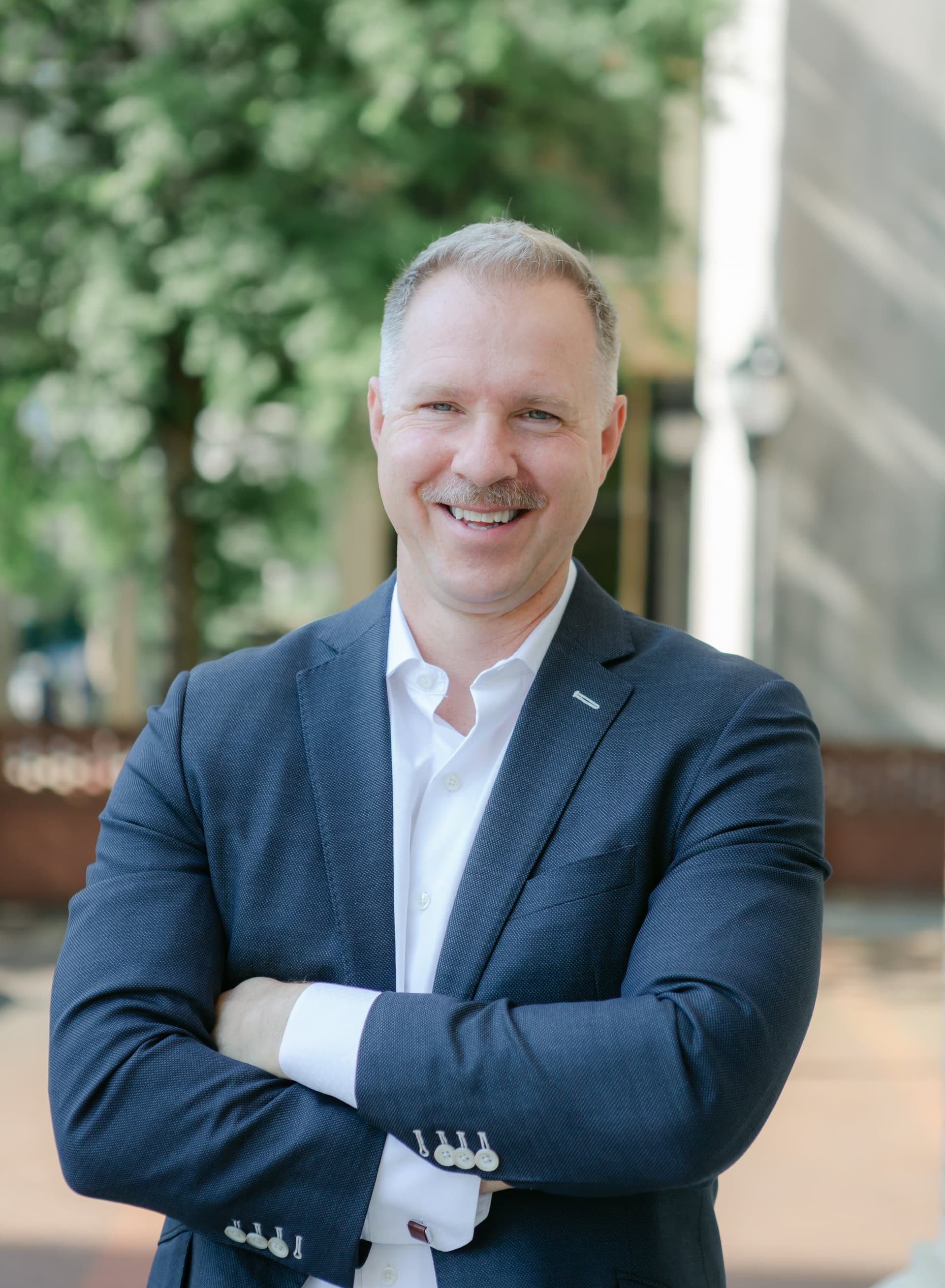
Written by
Jeremy StricklerManaging Director, CFP®
I grew up south of Pittsburgh in the foothills of the Appalachian mountains. I'm the oldest of 5 children. My parents built their own house and gardened. We did everything ourselves. Independence is a...
Read Jeremy's Story →Our team is always happy to explore how these ideas apply to your personal financial situation.
Schedule a ConversationJeremy Strickler, CFP®jeremy@wwmgreenville.com “See to it that no one fails to obtain the grace of God; that no root of bitterness springs up and causes trouble, and by it many become defiled; 16 that no one is … unholy like Esau, who sold his birthright for a single meal. 17 For you know that afterward, when he desired to inherit the […]
By Jeremy Strickler
I like the term “correction.” It implies that when markets sell off, they’re doing something right. I like this correction, because I think the markets were overpriced at 22x forward earnings. I like it when markets go down. How else will we be able to buy good investments at good prices?
By Jeremy Strickler
We see some storm clouds gathering as “higher for longer” interest rate era plays out. Over the past 3 months, we have had an enormous selloff in long term fixed income.
By Jeremy Strickler